
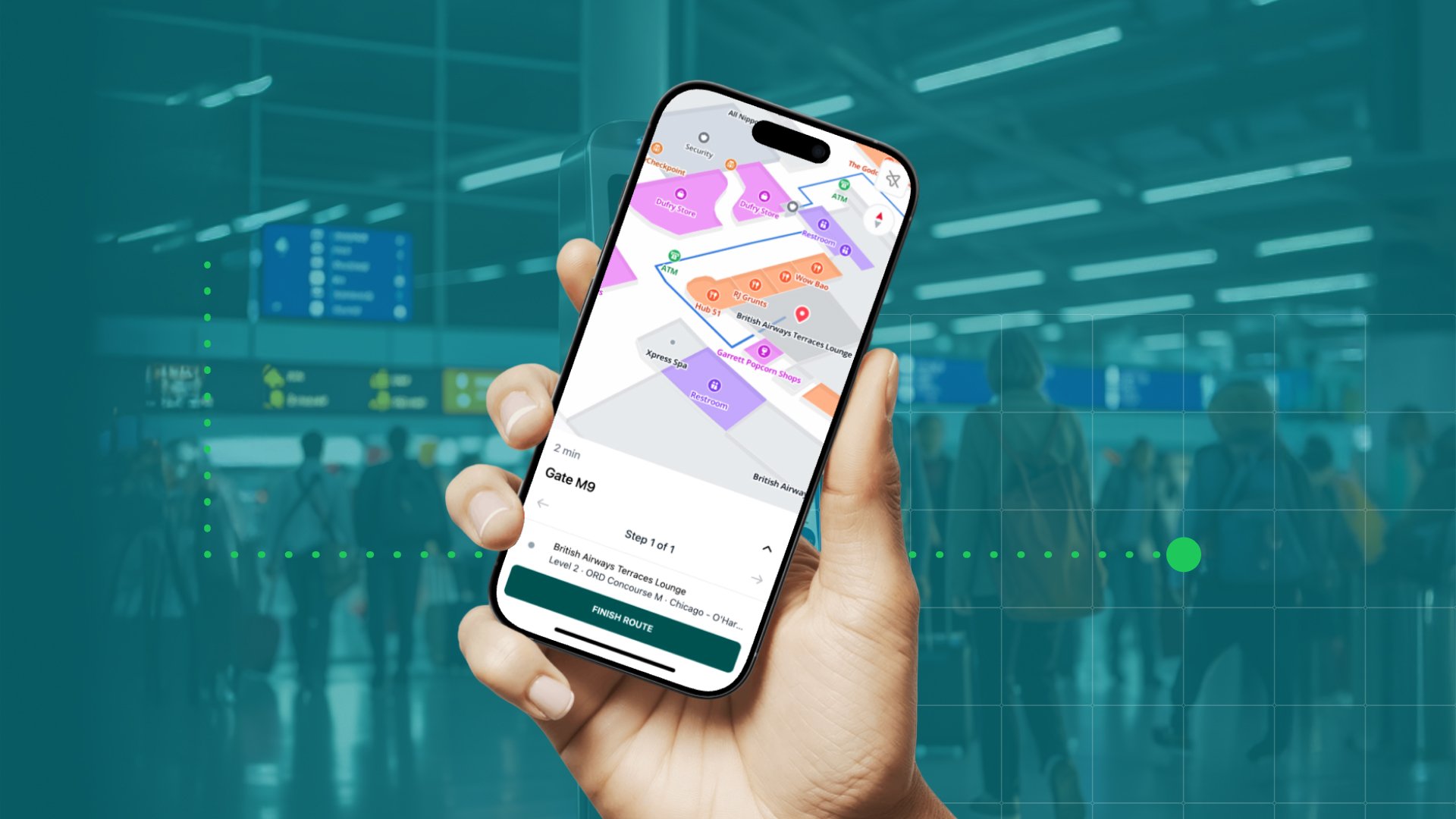
300+ Airport Maps Built for Systems that Power Travel
Airports are complex spaces.
Digital tools need to understand them to be useful whether guiding a traveller, coordinating a pickup, planning turnaround operations or anything else that depends on understanding the indoor space.
But most airport map data isn’t built to support that. And the problem isn’t the map. It’s the data behind it.
Why Airport Map Data is a Problem
Airports handle their spatial data differently.
There’s no shared format. No common structure. No predictable level of detail.
Some airports offer detailed digital maps. Others only share floorplans.
Labels, zones, routing logic and metadata vary widely—or are missing entirely.
To work across systems, spatial data needs to be:
- Machine-readable
- Structured in a consistent format
- Detailed at room or zone level
- Enriched with metadata on accessibility, security and usage types
But in practice, most airport data isn’t delivered this way.
You can’t assume the same structure from one airport to the next.
For companies building products across multiple airports, this fragmentation creates extra work—and real limits on what can be delivered at scale.

What’s Missing Without Structured Spatial Data
When your system doesn’t know where things are—or how they connect—it can’t provide:
- Estimated walk times
- Routing across terminals
- Smart pickup guidance
- Layout-aware staffing plans
- Real-time decision support
That missing spatial layer holds back tools meant to improve the travel experience.
What Structured Airport Data Makes Possible
When airport data is structured, your system can do more than just display a map.
Airport Spatial Data is delivered in formats like IMDF and GeoJSON and is built for ingestion by:
- Mapping engines
- Simulation tools
- Travel apps
- Operational systems
And much, much more…
Plus it gives you access to:
- Gates, lounges, shops and key POIs
- Detailed terminal layouts, down to individual rooms
- Routing between all POIs
- Classification by accessibility, security zones or space usage
- Time and distance calculations
- Passenger flow modelling and wayfinding logic
- Input for simulations, AR or digital twins
- Enrichment for mobility or location intelligence datasets
This is the kind of data travel tools need to actually perform across airports.
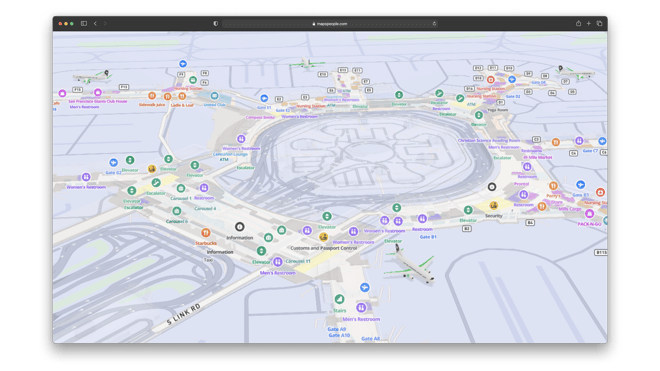
Structured Data for 300+ Airports
Airport Spatial Data gives you access to over 300 structured airport layouts.
All consistent. All updated. All usable across your product stack.
No more chasing files. No more fixing formats.
Just one data layer that supports all your airport-facing features.
Key Takeaways
Most airport maps show what’s there.
Structured spatial data shows how to use it.
If your product guides passengers, coordinates pickups, supports staff, or plans operations, this is the data it needs.
It makes digital tools work better in the places where guidance matters most.
Explore Airport Spatial Data
See what’s possible with accurate, structured data from over 300 airports.
Learn More about Airport Spatial Data
July 16, 2025
.jpg)